Applications of Bone Marrow and Blood Stem Cell Transplantation, Evaluation of Stem Cell Donors, and Administration of Blood Products
Keywords:
Bone Marrow, Blood Stem Cell Transplantation, Stem Cell Donors, AdministrationAbstract
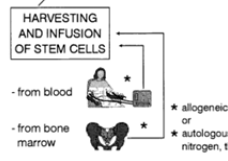
The umbrella word "stem cell transplantation" describes a variety of procedures. Hemopoietic stem cells are obtained for allogeneic transplants from a healthy, HLA-matched donor—a relative or a stranger—either from the patient's peripheral blood, bone marrow, or umbilical cord blood. Patients' own peripheral blood or bone marrow are used to harvest stem cells for autologous transplants. The current gold standard for stem cell transplantation is autologous transplantation, in which the patient serves as the donor. Thanks to advancements in cryopreservation, patients can now securely retain their bone marrow indefinitely during conditioning chemotherapy without worrying about the catastrophic loss of stem cells that occurs upon thawing. Patients experienced protracted neutropenia and thrombocytopenia, and the recovery of peripheral blood cell counts following transplantation of cryopreserved marrow that had been subjected to chemotherapy was sluggish. The process was less risky than allogeneic transplants, and neither graft-versus-host disease nor protracted immunosuppression occurred. Early research in the 1980s found that peripheral blood marrow stem cells circulated in low amounts in healthy individuals but in high numbers in patients regaining their neutropenia after chemotherapy. Granulocyte colonystimulating factor and other bone marrow growth factors improved stem cell outputs even further when administered to patients while they were recuperating. After receiving only the growth factor, few patients had an abnormally high amount of stem cells. This method typically allows for a safe autologous transplant by harvesting enough cells from the peripheral blood over the course of two or three days. Compared to patients who received autologous bone marrow that had been cryopreserved, those who underwent this sort of transplant had a quicker recovery of peripheral blood cell counts. Nowadays, adults undergoing stem cell transplants are most commonly drawn from peripheral blood.
Downloads
References
Forman SJ, Blume KG, Thomas ED, eds. Hematopoietic Cell Transplantation. 2nd Ed New York: Blackwell Science, 1999.
Khouri IF, Keating M, Korbling M, et al. Transplant-lite: induction of graft-versus malignancy using fludarabine-based nonablative chemotherapy and allogeneic blood progenitor-cell transplantation as a treatment for lymphoid malignancies. J Clin Oncol1998;16:2817-2824.
Rowe JM, Ciobanu N, Ascensao J, et al. Recommended guidelines for the manage ment of autologous and allogeneic bone marrow transplantation. Ann Intern Med 1994;120:143-158.
Rubinstein P, Carrier C, Scaradavou A, et al. Outcomes among 562 recipients of placental-blood transplants from unrelated donors. N Engl J Med 1998;339: 1565-1577.
Perry AR, Mackinnon S. Adoptive immunotherapy post bone-marrow transplantation. Blood Rev 1996;10:237-241.
Slavin S, Nagler A, Naparstek E, et al. Nonmyeloablative stem cell transplantation and cell therapy as an alternative to conventional bone marrow transplantation with lethal cytoreduction for the treatment of malignant and nonmalignant hematologic diseases. Blood 1998;91:756-763.
Kolb HJ. Donor leukocyte transfusions for treatment of leukemic relapse after bone marrow transplantation: EBMT Immunology and Chronic Leukemia Working Parties. Vox Sang 1998;74(suppl 2):321-329.
Ganser A, Karthaus M. Clinical use of hematopoietic growth factors. Curr Opin Oncol 1996;8:265-269.
Hebart H, Einsele H. Diagnosis and treatment of cytomegalovirus infection. Curr Opin Hematol 1998;5:483-487.
De Marie S. New developments in the diagnosis and management of invasive fungal infections. Haematologica 2000;85:88-93.
Lemoli RM, Curti A, Tura S. Negative selection of autologous peripheral blood stem cells. Baillieres Clin Haematol 1999;12:57-69.
Goldman JM, Schmitz N, Niethammer D, Gratwohl A. Allogeneic and autologous transplantation for haematological diseases, solid tumours and immune disorders: current practice in Europe in 1998. Accreditation Sub-Committee of the European Group for Blood and Marrow Transplantation. Bone Marrow Transplant 1998;21:1-7.
Burnett AK, Goldstone AH, Stevens RMF, et al. Randomised comparison of addition of autologous bone-marrow transplantation to intensive chemotherapy for acute myeloid leukaemia in first remission: results of MRC AML 10 trial: UK Medical Research Council Adult and Children’s Leukaemia Working Parties. Lancet 1998;351:700-708.
Hortobagyi GN, Buzdar AU, Theriault RL, et al. Randomized trial of high-dose chemotherapy and blood cell autografts for high-risk primary breast carcinoma. J Natl Cancer Inst 2000;92:225-233.
Attal M, Harousseau JL, Stoppa AM, et al. A prospective, randomized trial of autologous bone marrow transplantation and chemotherapy in multiple myeloma: Intergroupe Francais du Myelome. N Engl J Med 1996;335:91-97.
Proctor SJ, Taylor PRA, Mackie M, Angus B, Jack F, White J on behalf of Scotland & Newcastle Lymphoma Group. A randomized controlled trial (SNLG HD III) of nonablative autotransplant versus further chemotherapy in patients with very poor risk Hodgkin’s disease [Abstract]. Ann Oncol 1999;10(suppl 3):238.
Lucarelli G, Galimberti M, Polchi P, et al. Bone marrow transplantation in patients with thalassemia. N Engl J Med 1990;322:417-421.
McElwain TJ, Hedley DW, Gordon MY, Jarman M, Millar JL, Pritchard J. High dose melphalan and non-cryopreserved autologous bone marrow treatment of malignant melanoma and neuroblastoma. Exp Hematol 1979;7(suppl 5):360-371.
Laurence AD, Goldstone AH. High-dose therapy with hematopoietic transplantation for Hodgkin’s lymphoma. Semin Hematol 1999;36:303-312.
Downloads
Published
How to Cite
Issue
Section
License

This work is licensed under a Creative Commons Attribution 4.0 International License.
Current Clinical and Medical Education