Concentration-Dependent α-Amylase Inhibition by Fresh Juices of Momordica muricata and Phyllanthus emblica: A Phytotherapeutic Strategy for Type 2 Diabetes Management
Keywords:
Diabetes, Type 2 diabetes, Phytotherapy, Momordica muricataAbstract
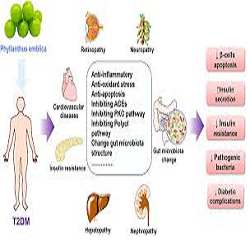
Diabetes mellitus continues to pose a serious public health challenge worldwide, with type 2 diabetes mellitus (T2DM) being the predominant form of the disease. Postprandial hyperglycemia is central to the onset of diabetic complications, making it a critical therapeutic target. This study explored the inhibitory effects of fresh juices derived from Momordica muricata and Phyllanthus emblica on pancreatic α-amylase, an enzyme essential for carbohydrate digestion. Using in vitro enzyme inhibition assays, the research demonstrated a concentration-dependent suppression of α-amylase activity by both plant juices. Results revealed that their inhibitory potential was comparable to the synthetic drug acarbose at higher concentrations. The combination of the two juices showed synergistic enhancement of enzyme inhibition. These findings reinforce the therapeutic value of unprocessed herbal juices and suggest that they may serve as safe, cost-effective, and culturally integrated alternatives or adjuncts to conventional pharmacotherapy for T2DM management.
Downloads
References
International Diabetes Federation. IDF Diabetes Atlas, 10th ed. Brussels: IDF; 2023.
DeFronzo RA, Ferrannini E, Groop L, et al. Type 2 diabetes mellitus. Nat Rev Dis Primers. 2015;1:15019.
Kahn SE. The relative contributions of insulin resistance and β-cell dysfunction. Diabetologia. 2003;46(1):3–19.
Monnier L, Lapinski H, Colette C. Contributions of fasting and postprandial glucose. Diabetes Care. 2003;26(3):881–5.
Sales PM, Souza PM, Simeoni LA, Magalhães PO, Silveira D. α-Amylase inhibitors: a review. J Pharm Pharm Sci. 2012;15(1):141–83.
Chiasson JL, Josse RG, Gomis R, et al. Acarbose for prevention of type 2 diabetes. Lancet. 2002;359(9323):2072–7.
Tundis R, Loizzo MR, Menichini F. Natural products as α-amylase and α-glucosidase inhibitors. Mini Rev Med Chem. 2010;10(4):315–31.
Modak M, Dixit P, Londhe J, Ghaskadbi S, Paul A, Devasagayam TP. Indian herbs and herbal drugs used for the treatment of diabetes. J Clin Biochem Nutr. 2007;40(3):163–73.
Al-Ishaq RK, Abotaleb M, Kubatka P, et al. Flavonoids and their anti-diabetic effects. Nutrients. 2019;11(9):2063.
Grover JK, Yadav S, Vats V. Medicinal plants of India with anti-diabetic potential. J Ethnopharmacol. 2002;81(1):81–100.
Krutika T, et al. In vitro models for anti-diabetic activity of medicinal plants. Int J Diabetes Metab. 2012;20:37–42.
Joseph B, Jini D. Antidiabetic effects of Momordica charantia. Asian Pac J Trop Dis. 2013;3(2):93–102.
Singh J, Cumming E, Manoharan G, et al. Medicinal chemistry of the anti-diabetic effects of Momordica charantia. Open Med Chem J. 2011;5:70–7.
Baliga MS, Meera S, Mathai B, et al. Scientific validation of Phyllanthus emblica. Phytother Res. 2013;27(4):429–35.
Nampoothiri SV, Venugopalan VV, Joy JM. Ameliorative effects of Phyllanthus emblica. Biomed Pharmacother. 2011;65(8):605–12.
Kumar S, et al. Synergistic effects of polyherbal formulations. J Ethnopharmacol. 2017;197:182–90.
Khan A, et al. Clinical evaluation of Ocimum sanctum. J Ayurveda Integr Med. 2019;10(3):176–82.
Mehta A, et al. Antidiabetic activity of Cinnamomum zeylanicum. BMC Complement Med Ther. 2019;19:12.
Banerjee M, et al. Curcumin and insulin resistance. Diabetes Metab Syndr. 2019;13(2):1165–71.
Miller GL. Use of DNS reagent for determination of reducing sugar. Anal Chem. 1959;31(3):426–8.
van de Laar FA. Alpha-glucosidase inhibitors in type 2 diabetes. Vasc Health Risk Manag. 2008;4(6):1189–95.
Lee YS, Choi JS, Ha YM, et al. Inhibitory effect of Momordica charantia on postprandial hyperglycemia. J Med Food. 2008;11(2):318–24.
Majeed M, et al. Phyllanthus emblica extract inhibition of digestive enzymes. J Sci Food Agric. 2019;99(4):1686–94.
Poovitha S, Parani M. In vitro and in vivo α-amylase inhibition by medicinal plants. BMC Complement Altern Med. 2016;16:185.
Patel DK, Prasad SK, Kumar R, Hemalatha S. Natural bioactive compounds as enzyme inhibitors. Phytother Res. 2012;26(3):411–25.
Scartezzini P, Antognoni F, Raggi MA, et al. Vitamin C content and antioxidant activity of Phyllanthus emblica. J Ethnopharmacol. 2006;104(3):351–8.
Williamson EM. Synergy and other interactions in phytomedicines. Phytomedicine. 2001;8(5):401–9.
World Health Organization. WHO Monographs on Selected Medicinal Plants, Vol. 2. Geneva: WHO; 2004.
King AJ. The use of animal models in diabetes research. Br J Pharmacol. 2012;166(3):877–94.
Ekor M. The growing use of herbal medicines: issues of safety. Front Pharmacol. 2014;4:177.
Newman DJ, Cragg GM. Natural products as sources of new drugs. J Nat Prod. 2016;79(3):629–61.
Downloads
Published
How to Cite
Issue
Section
License
Copyright (c) 2025 Mr Ravi Prajapati, Dr. Mangal Singh Panwar, Mr. Vijay Ojha

This work is licensed under a Creative Commons Attribution 4.0 International License.
Current Clinical and Medical Education