Perceived Dietary Knowledge among women with polycystic ovarian syndrome: A case-control study
Keywords:
Perceived Dietary Knowledge, case-controlAbstract
: Polycystic Ovary Syndrome (PCOS) is a common endocrine condition in women of reproductive age, marked by symptoms including monthly abnormalities, hyperandrogenism, and the presence of polycystic ovaries. Dietary choices significantly influence symptoms and overall health outcomes. This study assesses the level of perceived dietary knowledge among women with PCOS.
Methods: A case-control study was conducted on a purposive type of sample consisted of 200 women giving Tikrit Teaching Hospital and outpation gynecology clinics. A case group of 100 cases (PCOS) and a control group of 100 cases (healthy women ). Data were collected via a validated structured interview questionnaire and analyzed using Statistical Package for Social Science Program (IBM SPSS) version 26.0.
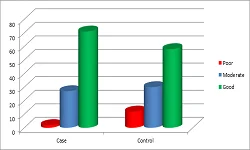
Result: The mean age of the participant was 28± 6.5 years. The study found that there was a significant differences between two groups in marital status,eductional level and economic status (p<0.05). Women with PCOS showing significantly high level of knowledge comparing to healthy women in specific aspects, particularly regarding the benefits of whole grains ((P=.003) and lean proteins (P= 0.038) in managing PCOS symptoms.
Conclusion: the study concludes that women with PCOS generally possess good level of nutritional knowledge particularly the benefits of whole grains and proteins. While perceived knowledge is good The study emphasizes the need for specialized nutritional counseling for women with PCOS, providing accurate information regarding the benefits of healthy dietary patterns.
Downloads
References
Abutaima, R., Barakat, M., Sawan, H. M., Omari, S. M. A., & Mhaidat, N. M. (2024). Knowledge, attitudes, and practices towards the use of GLP-1 receptor agonists for weight loss among the general population in Jordan; A cross-sectional study. PLOS ONE, 19(12), e0314407. https://doi.org/10.1371/journal.pone.0314407
Alqntash, N., AlZabin, A., Almajed, E., Alotaibi, K., Alhindi, G., Ali, S. I., & Bakhsh, H. (2024). Polycystic Ovary Syndrome: A Comprehensive Exploration of Diagnosis Experience in Saudi Women. Journal of Clinical Medicine, 13(17), 5305. https://doi.org/10.3390/jcm13175305
Alsaadi, Y. L., & Mohamad, B. J. (2019). Prevalence of hyperandrogenism in Iraqi women with polycystic ovary syndrome. Iraqi Journal of Science, 2600–2608. https://doi.org/10.24996/ijs.2019.60.12.8
Al-Taii, R., & Jankeer, M. (2025). Evaluation of the Role of some Myokines and Tumor Necrosis Factor-Alpha in Women with Polycystic Ovary Syndrome in Mosul City-Iraq. Rafidain Journal of Science, 34(2), 23–30. https://doi.org/10.33899/rjs.2025.187739
Azziz, R. (2018). Polycystic Ovary Syndrome. Obstetrics & Gynecology, 132(2), 321. https://doi.org/10.1097/AOG.0000000000002698
Bykowska-Derda, A., Czlapka-Matyasik, M., Kaluzna, M., Ruchala, M., & Ziemnicka, K. (2021a). Diet quality scores in relation to fatness and nutritional knowledge in women with polycystic ovary syndrome: Case–control study. Public Health Nutrition, 24(11), 3389–3398. https://doi.org/10.1017/S1368980020001755
Chang, S., & Dunaif, A. (2021). Diagnosis of Polycystic Ovary Syndrome. Endocrinology and Metabolism Clinics of North America, 50(1), 11–23. https://doi.org/10.1016/j.ecl.2020.10.002
Douglas, C. C., Jones, R., Green, R., Brown, K., Yount, G., & Williams, R. (2021). University Students with PCOS Demonstrate Limited Nutrition Knowledge. American Journal of Health Education, 52(2), 80–91. https://doi.org/10.1080/19325037.2021.1877218
Downloads
Published
How to Cite
Issue
Section
License
Copyright (c) 2025 Aseel Mansoor, Suhailah M. Ali

This work is licensed under a Creative Commons Attribution 4.0 International License.
Current Clinical and Medical Education